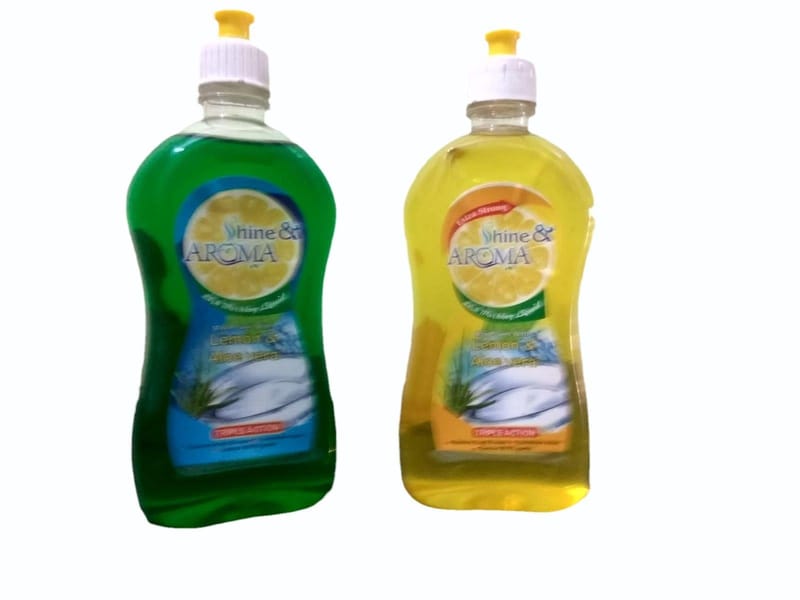
A hotel chef walked me through his kitchen at 11 PM after a banquet shift and pointed at three different dishwash bottles sitting under three different sinks. Pot wash. Crockery wash. Glassware wash. Three completely different products. The procurement team upstairs had been asking him for years why he didn't just standardise on one. The answer, which had never made it into a procurement memo, was that one product would either ruin the glassware or fail to clean the pot.
This post is for the hotel or restaurant procurement team that is about to make that same suggestion.
The three dish wash chemistries, properly named
Commercial dish wash splits into three product families. They look similar on the back label and behave very differently in use.
Pot wash (heavy-duty hand dish liquid) — high active surfactant load (22-30%), strong grease cut, alkaline-leaning pH (8.5-9.5), foam-rich for hand-washing baked-on residue. Used at sinks where chefs scrub burnt deposits off pots, pans, oven trays. Wrong on glassware (over-sudses, leaves film).
Crockery wash (machine dish detergent) — lower active surfactant (8-12%), stronger alkaline (pH 11-12.5), low-foam, often with a chelant for hard water. Used in commercial dishwashers (rack-conveyor or door-type machines). Cannot be used by hand — too alkaline, no foam.
Glassware wash (hand or machine) — neutral pH (6.8-7.4), low-foam, surfactant-light, additive package focused on rinse-aid and water-sheeting to avoid spotting. Used on glassware where any residue spoils the visual.
A hotel chef using one product across all three sinks is either accepting a compromised result on at least one (usually the glassware) or working around the problem with technique. The procurement saving from "one product" is wiped out at the first guest complaint about a cloudy wine glass.
What a proper kitchen-chemicals layout looks like
For a 80-cover restaurant or a typical hotel main kitchen serving 250-400 guests, the minimum useful chemical inventory at the dish-wash station:
| SKU | Where it sits | Approximate monthly usage |
|---|---|---|
| Pot wash concentrate | Three-sink hand-wash station | 22-35 L |
| Machine dish detergent | Dispensing pump, dishwasher | 40-65 L |
| Machine rinse aid | Dispensing pump, dishwasher rinse line | 4-8 L |
| Hand dish glassware liquid | Dedicated glassware sink | 8-12 L |
| Periodic limescale remover | Monthly deep-clean of dishwasher | 2-4 L |
A property buying only the first one and improvising for the rest is the property whose head waiter has to apologise for cloudy glasses on Saturday night.
Where most kitchens can save
Two real savings exist:
Switch the machine detergent from a 5 L jerry to a 20 L pail with a wall-mounted dispensing pump. This eliminates the over-dose pattern (chefs adding "a bit extra" to the tank when they think the previous wash wasn't clean enough) and reduces consumption by 18-25% at most properties. Pump cost: about ₹4,500. Saving at a typical 250-cover kitchen: ₹3,500-5,500 per month.
Use the rinse aid that matches your water hardness. Most commercial dishwashers in India run on tap water that is 250-450 ppm hardness, which clouds glassware no matter what the wash detergent does. A water-conditioned rinse aid (chelant-built) at the right dose eliminates 80% of glassware spotting at zero capex change. Most properties using a generic rinse aid are leaving this on the table.
Food-safety compliance
For commercial kitchens shipping to FSSAI-audited operations:
- All chemistries must hold a current FSSAI-acceptable status (no chlorinated solvents in any form, no aromatic VOCs)
- The post-rinse residue must clear a swab test (typically demonstrating < 50 ppm surfactant residue on dried surfaces)
- The training documentation must specify the dilution and dwell time, in the local language
We ship the FSSAI-compliance dossier with every consignment to an FSSAI-audited account. The dossier is mandatory for any commercial kitchen audited under the FSSAI framework.
What we ship
Our commercial dish wash liquid ships in three SKUs — pot wash concentrate, machine dish detergent, and glassware-grade hand wash. The machine dish detergent is the highest-volume SKU we ship to hotels and ships in 5 L, 20 L pail and 200 L drum. The rinse aid is a related SKU available in 5 L and 25 L.
For deeper context on the kitchen-floor side of the chemical programme, see the UCLIPSE U7 / Taski R7 post.
A practical evaluation
Order one 5 L sample of the machine dish detergent and run it through your dishwasher for one week, measuring the per-rack chemistry usage. Compare to your current product. Then run a glassware spot test (dry a wine glass after a wash cycle, hold it against a black surface, look for streaks). The two tests together take about 90 minutes of one chef's evening time and decide the procurement question.
Get in touch with your kitchen size and current chemical inventory. We will quote the three-SKU programme and lay out the dispensing-pump and rinse-aid changes that pay back in months, not years.
Sources & Citations
- The global dish care market exceeded $22 billion in 2024 with the commercial segment growing at 6.2% annuallySource: Allied Market Research – Dish Care Market Forecast - View Source
- Commercial formulations with rapid sheeting action reduce rinse cycles by 20–30% in institutional settingsSource: Journal of Surfactants and Detergents - View Source
Ready to Start Your Project?
Partner with Shine And Aroma Home Care for expert contract manufacturing services. Our team is ready to bring your product vision to life with quality and precision.
