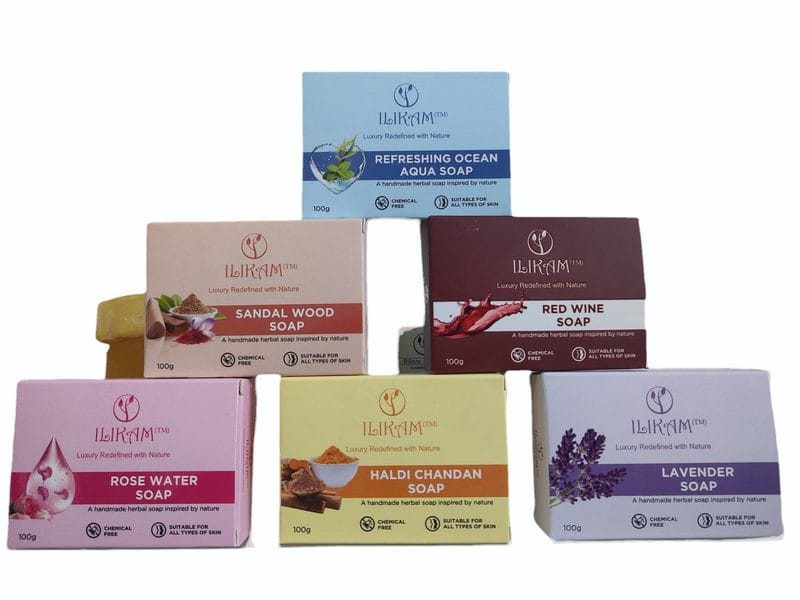
Walk into the bathroom of almost any four- or five-star hotel built in the last fifteen years and pick up the soap bar. Roughly nine times out of ten, it will be a transparent or translucent glycerin soap in a 25 to 40 gram weight band. Twenty years ago it would have been an opaque, talc-loaded toilet soap. The shift was not driven by guest preference — guests do not pick hotels by their soap chemistry — it was driven by procurement, and specifically by three numbers on a spec sheet.
This is the story of those three numbers, and what they mean if you are sourcing hotel soap today.
Number one: shrinkage
A conventional opaque toilet soap is 75–80% saponified vegetable oil, 8–12% water, and the rest builders, salt and fragrance. By the time it sits on a humid bathroom shelf for three days, it has lost 4–6% of its weight to evaporation. The bar that arrived as a nice-looking 30 g brick now feels lighter; the embossed logo is slightly distorted; the corners look chipped.
Glycerin soap is structurally different. It contains 18–22% glycerin and roughly 30% sugars and humectants by formula, in a transparent matrix held together by a stearate gel. Glycerin is a humectant — it pulls water in from the air rather than letting it out. A glycerin bar in the same humid bathroom, on day three, weighs roughly the same as the day it was made.
For a procurement team running a spec sheet, this matters because it eliminates the "bar looks tired by day two" complaint from housekeeping inspections. That single complaint, repeated across rooms, is how soap brands get switched.
Number two: fragrance throw at first lather
A guest's first interaction with the soap is wetting it under the tap and rubbing it between hands. The fragrance has about three seconds to register. Conventional opaque soaps need a fragrance loading of 1.0 to 1.4% to register clearly in those three seconds; glycerin soaps register clearly at 0.6 to 0.8%.
This is because the transparent matrix releases volatile fragrance components more readily — there is no opaque starch or talc loading to bind them. For procurement, the consequence is direct: a glycerin bar with the same perceived fragrance quality costs roughly 30% less in fragrance load than a conventional bar. Fragrance is one of the larger BOM lines in a premium soap, so this is not a trivial saving.
Number three: the embossing tolerance
Hotel brand teams care about logo embossing. The crisper the embossing, the more "premium" the bar reads. Conventional toilet soap embosses well at the moment of stamping but loses sharpness over storage as the bar slowly creeps under its own weight. Glycerin soap, because of the stearate gel structure, holds embossing tolerance for the full shelf life of the bar (typically 24 months sealed).
Five-star property procurement typically requires legible logo at the point the bar is opened by the guest. A conventional bar that ships in week one and reaches a Goa property warehouse in week six and reaches the guest bathroom in week ten is a very different bar from the one that left the factory. A glycerin bar is the same bar.
What this looks like in numbers
For the same 25 g luxury bar SKU, here is the rough commercial picture for an Indian hotel chain ordering at moderate volume (say 300,000 bars/year).
| Spec | Conventional opaque toilet soap | Transparent glycerin soap |
|---|---|---|
| Bar weight at guest pickup (day 7) | ~26.8 g (started 28 g) | ~28 g (no measurable shrink) |
| Fragrance loading required | 1.0–1.4% | 0.6–0.8% |
| Embossing legibility at month 10 | Visible degradation | As-stamped |
| Per-bar landed cost (indicative) | Baseline | ~12–18% higher BOM, ~25% lower complaint rate |
| Net cost-of-ownership per guest-night | Baseline | Roughly even or slightly lower |
The BOM is higher; the complaint rate is lower; the net is roughly even. The procurement decision is not about saving rupees — it is about removing the recurring complaint.
What we make for hotels
We pour glycerin bars from 15 g (welcome amenity) to 100 g (signature spa bar). Standard fragrance options are jasmine, rose, lemongrass, sandalwood, vanilla and a "fresh linen" white-floral; custom signature scents are developed in three to four weeks for chains taking 200+ kg of base. Our standard glycerin bath soap is the SKU we ship most frequently to hotel buyers; transparent variants and herbal infusions are available on the same base.
A practical sourcing note
If you are sourcing for a chain and you have not switched to glycerin already, the right pilot is ten properties for one quarter. Track three things: housekeeping complaints about "tired" bars (should drop), fragrance complaints (should drop), and unit cost (will rise slightly). Most chains we have piloted with conclude on the basis of complaint reduction alone.
Get in touch with your annual volume and target weight band. We will ship a free sample pack of three weights and three fragrances for your housekeeping team to assess.
Sources & Citations
- Gentle cleansers with humectants like glycerin significantly reduce skin irritationSource: American Academy of Dermatology - View Source
- 76% of global travelers want to travel more sustainablySource: Booking.com Sustainable Travel Report 2023 - View Source
Ready to Start Your Project?
Partner with Shine And Aroma Home Care for expert contract manufacturing services. Our team is ready to bring your product vision to life with quality and precision.
